Why Now · Vision
In the age of AI, a leader's capacity is what's put to the test.
Efficiency, analysis, the speed of reaching an answer — from here on, AI will do all of these better. What remains in a leader's hands is the work AI cannot take on: deciding where there is no right answer, joining forces with people who stand somewhere else entirely, and betting on a future that can't yet be put into words.
What shapes that work isn't how much knowledge or skill you have. It's the breadth of how you perceive the world. We call it capacity — the size of the vessel you bring to the world. The problem is that this capacity is becoming harder to grow, for reasons that have little to do with how talented or hard-working you are. Why do we say so? Let us take it step by step.
01 · A structure where capacity struggles to grow
Capacity is renewed only by contact with a different world.
Yet Japanese organizations are homogeneous and closed to a degree rarely seen anywhere in the world. The three international indicators below may look like separate problems, but they are in fact one and the same structure — the absence of border-crossing — seen from different angles.
Global Gender Gap Index
118/ 148
Decision-making rooms are filled with people of similar backgrounds.
Women hold about 12% of management positions (OECD average: 40%). In economic and political participation, Japan ranks among the lowest of the developed nations.
Source: WEF Global Gender Gap Report 2025
Youth in leadership
121/ c. 140
Without friction between generations, assumptions go unquestioned.
The average age of managers is 48.6. Only 3.2% of managers are under 30 (10–20% across the OECD).
Source: Ministry of Health, Labour and Welfare (Japan) / WEF, 2024
Young people's hope for the future
15.6%
The next generation grows up without feeling it can change anything.
The share of 18-year-olds who say their country's future will get better — far behind China (85.0%) and India (78.3%), and last among six countries. Japan also ranked last on “I can change society through my own actions.”
Source: The Nippon Foundation, 18-Year-Olds Survey, No. 78 (2026)
Similar people, working from similar assumptions, keep making decisions without ever hearing from outside. Our judgment is shaped inside that environment. The tricky part is that it can't be seen from within. The higher you rise, the fewer people there are to reflect your assumptions back to you.
02 · Why training alone doesn't change it
Capacity doesn't grow by addition.
The usual response to this structure is to add more learning: more training, more knowledge. But that isn't what moves capacity. Adult development theory (our program is supervised by adult developmental scientist Yohei Kato) distinguishes two kinds of growth in adults: horizontal development, in which knowledge and skills increase, and vertical development, in which the very way you see the world changes.
What AI has dramatically raised is the horizontal. That is exactly why what's now asked of leaders is the vertical — the growth of capacity itself. And vertical development doesn't happen no matter how much information you add. The key is to turn the assumptions you've been unconsciously holding into something you can look at from the outside. This is the shift at the very heart of developmental theory.
That shift happens when you encounter a world utterly unlike your own, and your own “normal” is reflected back to you. This is why we can say that crossing borders is a reliable way to grow capacity.
Locate where you stand today on both axes. AI pushes you along the horizontal; TBJ grows the vertical.
03 · That's why TBJ designs for crossing borders
Not leaving it to chance — making border-crossing happen.
Crossing borders doesn't happen automatically just because you go abroad. TBJ designs the space so that the chance of having your assumptions shaken is as high as it can be: dialogue with practitioners from six countries — living wisdom; a structure in which executives and peers of many generations face the same questions together; and a continuous experience of ten sessions over four months, grounded in adult development theory. Not a training course, but a formative experience. Running through that design are three principles.
Borderless
Different worlds, in the same room.
Practitioners from six countries and participants of every generation, from executives to students, face the same questions together. We design to maximize the chance that assumptions get shaken.
Connection
Not a one-off.
Four months of continuous experience, and relationships that carry on long after. Instead of letting the shake-up fade, we help it settle into a lasting compass for judgment.
Ecosystem
Pass it on to the next generation.
Executives' participation funds the border-crossing of selected students. Through circulation rather than ownership, perspective opens outward to society.
04 · What it brings back to your business
Expanding capacity is not an abstraction.
As capacity expands, it shows up as concrete differences in how you run your business day to day. You become able to decide with a clear axis, even amid uncertainty. You become able to lead people of different generations and nationalities as one team. And you can rethink what “richness” and success mean for your company with a broader yardstick (the Nine Capitals; from ego to eco). Below, we've summarized these changes from two sides: the individual leader, and society.
What comes back to you as a leader
- Deciding with a clear axis amid uncertainty
- A feel for leading teams across generations and borders
- A new yardstick for measuring “richness” (the Nine Capitals)
- Lifelong companions, met without titles
And beyond that, what spreads into society
- More people who handle diversity through lived experience, not just knowledge
- Young people standing at the center of decision-making
- An international critical spirit and multiple perspectives
- Border-crossing individuals as starting points for change in organizations and in Japan
A change that begins inside one leader eventually becomes the starting point that moves an organization, and then the next generation. The more we can hand over to AI, the heavier the judgments only people can make. How far can you expand the capacity that supports those judgments in four months? TBJ is a place that takes that question seriously.
Supervisor's Message
A Message from Our Supervisor
Growth that crosses the world's borders — without leaving Japan.
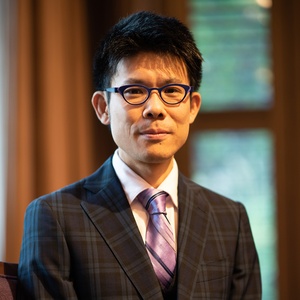
Supervisor
Yohei Kato
Adult developmental scientist / Based in Groningen, the Netherlands / Program supervisor
I'm Yohei Kato, an adult developmental scientist. Together with Wako Kudeken, CEO of Smoooth Inc., I'm delighted to be launching a cross-border program that brings together ten practitioners working at the forefront around the world.
Each of us has our own way of seeing, our own assumptions and values. They are a precious framework of perception, shaped by the environments we grew up in. Yet at a certain stage of life, there comes a moment when we think: “I want to see the world from a wider perspective.” “Perhaps my potential lies beyond the frame I'm in now.”
In adult development theory, that moment is a door to the next stage of development. And one important key to opening that door is the experience of crossing borders. Crossing borders isn't only about crossing national boundaries. It is the experience of having your assumptions loosen, and a wider way of seeing the world emerge, through encounters with different cultures, generations, values and people.
The Borderless Journey was designed as “a place to cross borders without leaving Japan.” You don't have to go abroad to broaden the way you perceive the world. In this program, you will meet and talk with speakers who have lived from different vantage points, and shine a light on your own values. It is learning through exchanging questions, not through lectures.
Not searching for the right answer, but asking: “Why do I think this way?” “What does the world look like through other eyes?” Through those questions and that dialogue, our values come untied and are rebuilt.
Having been involved in developing this program over the past year, I have come to feel that this place holds the power to support a transition between stages. I look forward to the moments it will create: touching the world outside, feeling something stir within, and quietly watching who you are now give way to who you are becoming.
This time, the theme is “crossing borders.” Crossing borders is not a talent but a state of mind. A single step is enough to change the world you see. And when your world changes, your life begins to move.
Won't you open the door to your next stage of growth here, together with us? This program carries a wish to support the challenges of the younger generation. I hope this place becomes a rich and fruitful time that supports your next step.
Yohei Kato (Adult developmental scientist, program supervisor)
Join · Season 2
Four months, standing with peers
before questions without answers.
Season 2 opens in August. Start by joining an info session and feeling the atmosphere for yourself.